
If the tyre pressure warning light comes on, one or more tyres may be under-inflated or the tyre-pressure monitoring system itself may have a fault. The safest response is to slow down, avoid ignoring the warning, and check your tyre pressures as soon as you can do so safely.
The warning is usually shown as an amber or yellow horseshoe-shaped symbol with an exclamation mark in the centre. It is commonly known as the TPMS warning light, because it is linked to the Tyre Pressure Monitoring System.
What does TPMS do?
TPMS monitors tyre pressure and alerts the driver when pressure falls sufficiently to create a potential safety issue. Some systems use pressure sensors fitted to the wheels, while others infer pressure loss from wheel-speed behaviour.
Whatever system your car uses, TPMS is a warning aid rather than a replacement for regular manual checks.
Why does the tyre pressure warning light come on?
Common reasons include:
- one or more tyres are genuinely under-inflated;
- a slow puncture or valve leak is causing pressure loss;
- cold weather has reduced tyre pressure;
- a tyre was recently changed or pressures were adjusted without the system being reset correctly; or
- the TPMS sensor or system has developed a fault.
RAC guidance notes that the light appears when the system detects a pressure drop and that intermittent warnings can sometimes be linked to temperature changes.
What should you do when the TPMS light comes on?
- Reduce speed and drive smoothly. Avoid harsh cornering or braking.
- Stop somewhere safe. Do not inspect tyres in a dangerous roadside position.
- Look at all four tyres. If one looks visibly flat or damaged, do not continue normal driving.
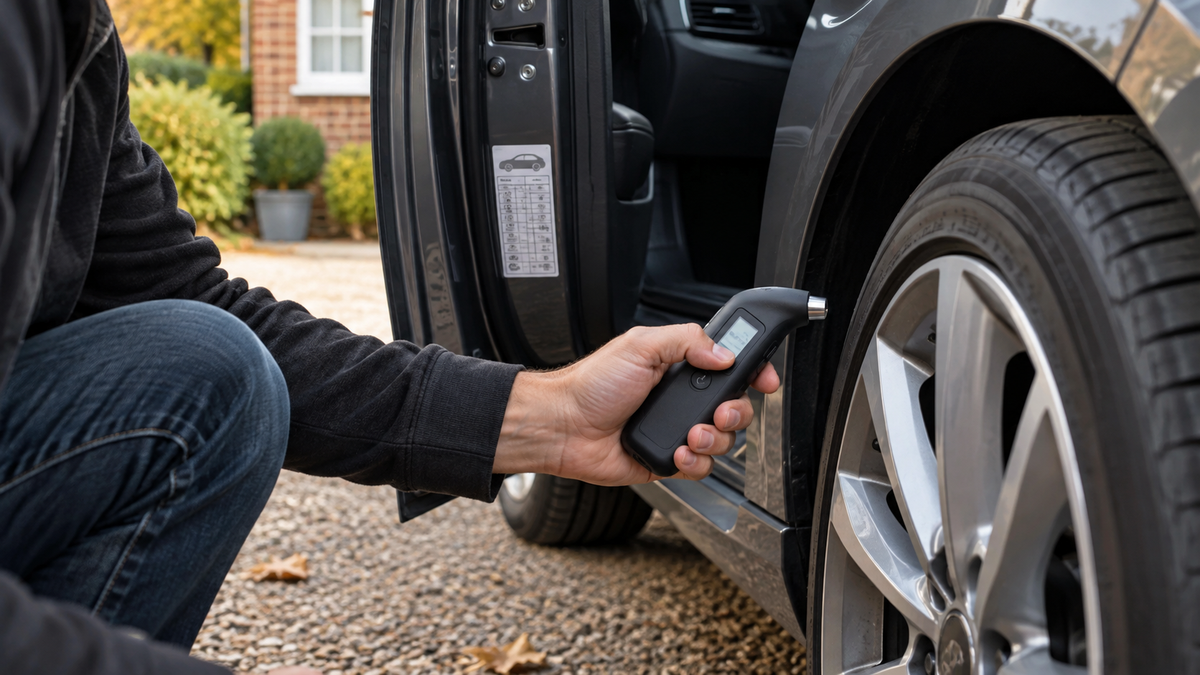
- Check pressures when safe. Compare them with the manufacturer’s recommended figures.
- Correct low pressure only if the tyre appears undamaged.
- Investigate repeated pressure loss. A tyre that keeps losing air needs professional attention.
Our guide What Should Your Tyre Pressure Be? explains where to find the correct PSI or BAR for your car.
What does a flashing tyre pressure warning light mean?
A flashing TPMS light commonly points to a problem with the monitoring system rather than simply low pressure. RAC guidance says a flashing warning can indicate a sensor or TPMS fault.
If the light flashes and then remains illuminated, check the tyre pressures manually and arrange diagnosis if the warning continues.
Can cold weather trigger the tyre pressure light?
Yes. Falling temperatures reduce the pressure of the air inside the tyre, which can be enough to trigger TPMS on a cold morning.
That does not mean the warning should be ignored. Check the tyres and restore them to the manufacturer’s recommended cold pressure. Read Why Does Tyre Pressure Drop in Cold Weather? for a fuller explanation.
Can you drive with the tyre pressure warning light on?
Do not treat the warning as something to leave until your next service. How serious it is depends on the cause.
If a tyre is visibly flat, damaged, rapidly losing air or the car feels unstable, stop as soon as it is safe and arrange assistance. If all tyres appear normal, drive cautiously to a safe place where you can check the pressures properly.
How to check the tyre pressure after a warning
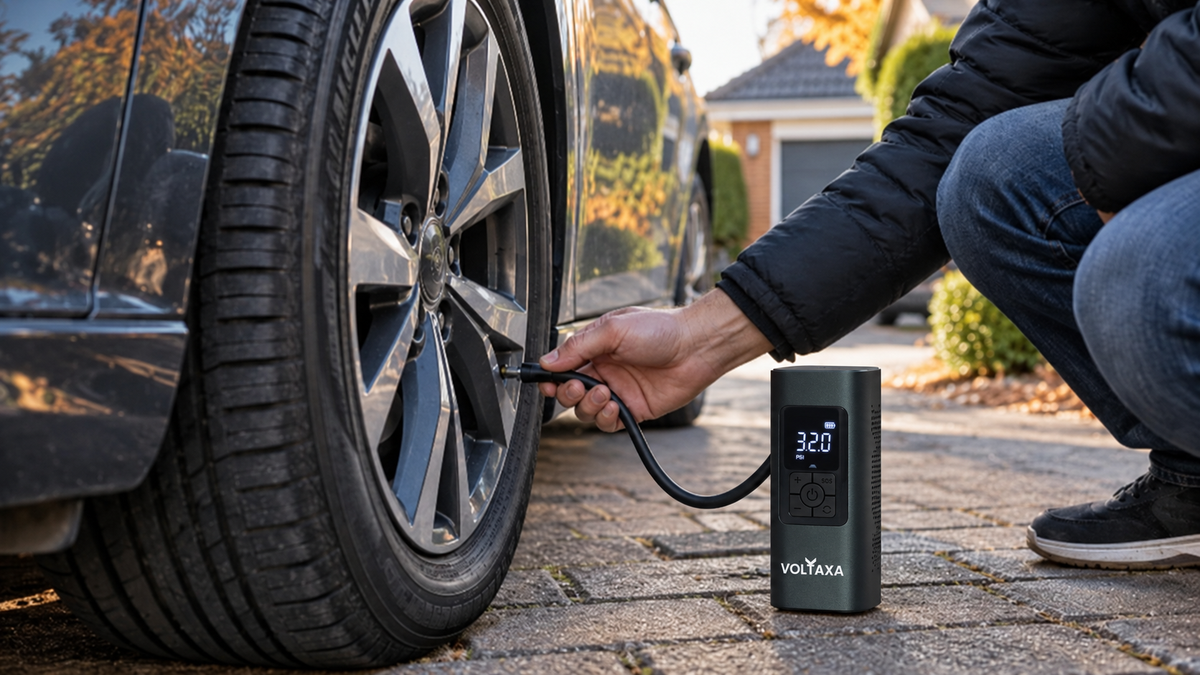
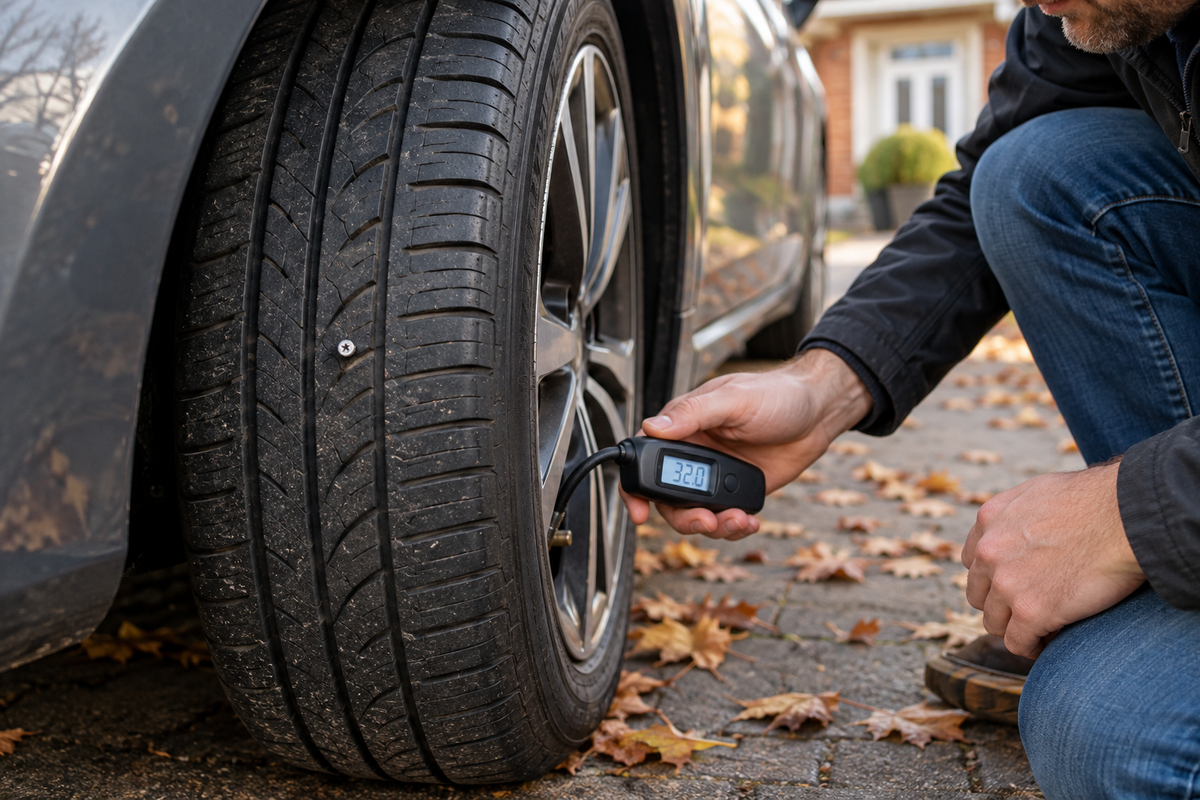
Use a reliable gauge and compare each tyre against the vehicle manufacturer’s cold-pressure specification. The Voltaxa Digital Tyre Pressure Gauge is designed for quick checks, while the Voltaxa Cordless Tyre Inflator can top up an otherwise sound tyre.
If one tyre is substantially lower than the rest, or loses pressure again, have it inspected for a puncture, valve leak or wheel problem.
Should you reset TPMS immediately?
Do not use the reset function simply to make the warning disappear.
First check and correct the pressures according to your vehicle handbook. Then follow the manufacturer’s reset or calibration procedure if required. Resetting without fixing the cause can hide useful warning information.
TPMS does not replace routine tyre checks
TPMS is useful, but it may not warn you about every smaller pressure difference. Check tyres routinely rather than waiting for the dashboard light.
See How Often Should You Check Tyre Pressure? and include tread checks too. Our UK tyre tread guide explains the 1.6mm legal minimum.
Frequently asked questions
What does the yellow tyre symbol mean?
It is usually the TPMS warning light, indicating low tyre pressure or a fault with the monitoring system.
Why did my tyre pressure light come on overnight?
A sharp fall in temperature can lower pressure enough to trigger the warning, although you should still check for actual air loss.
Why is my TPMS light flashing?
A flashing light often indicates a sensor or system fault rather than only low pressure.
Will the light go off after adding air?
Often yes, although some vehicles need a reset or a short drive. Always follow the handbook.
What if the light stays on?
Recheck the pressures. If they are correct, the system may need diagnosis or recalibration.
Final thoughts
A tyre pressure warning light is there for a reason. Check the tyres, correct genuine low pressure using the manufacturer’s figures and investigate repeated loss or a persistent TPMS fault.
For a compact setup, see the Voltaxa Tyre Safety Kit or browse Car Maintenance.

Leave a comment
This site is protected by hCaptcha and the hCaptcha Privacy Policy and Terms of Service apply.