
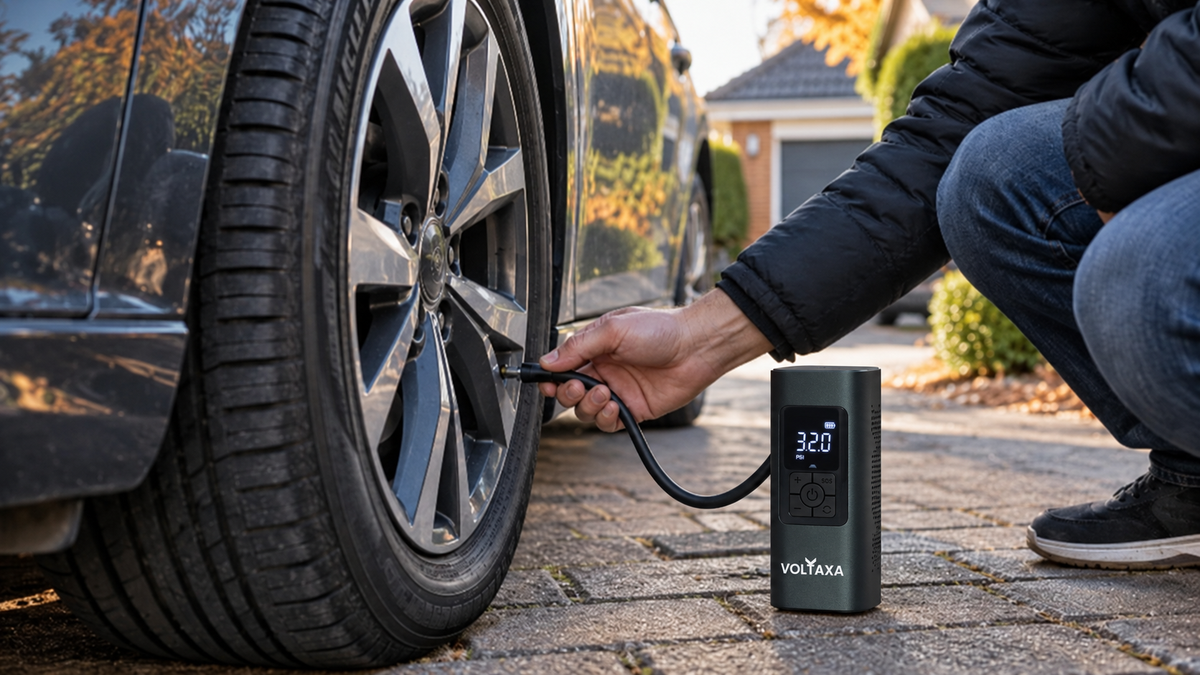
Cold weather can lower your tyre pressure even when there is no puncture. As outside temperatures fall, the air inside a tyre cools and the pressure reading drops. A useful rule of thumb is that tyre pressure can change by around 1–2 PSI for every 10°C change in temperature, which is enough for a cold snap to trigger a tyre pressure warning on some vehicles.
For UK drivers, this makes autumn and winter an important time to check tyre pressures regularly. The answer is not to guess or add an arbitrary amount of extra air: check the tyres when they are cold and restore them to the pressure recommended by your vehicle manufacturer.
Why does tyre pressure drop in cold weather?
Tyre pressure changes because the air inside your tyres responds to temperature.
When the air becomes colder, its molecules move with less energy and exert less pressure against the inside of the tyre. The tyre therefore gives a lower PSI or BAR reading even if no significant amount of air has escaped.
The opposite happens when the tyre warms up. Pressure rises as the temperature of the air inside increases, which is why a tyre checked after driving can show a higher reading than the same tyre did before the journey.
This temperature effect is normal, but it should not be used as a reason to ignore a low-pressure warning. A cold spell may explain the change, but the tyre still needs to be checked.
How much does tyre pressure drop when the temperature falls?
A practical rule of thumb is around 1–2 PSI for each 10°C change in temperature. Michelin UK notes that a 10°C increase in tyre temperature can raise tyre pressure by around 1–2 PSI; the same relationship works in the opposite direction when temperatures fall.
For example, imagine your tyres were correctly set during mild weather at around 15°C. If the overnight temperature later falls to around 5°C, the same tyres may read roughly 1–2 PSI lower before you have even driven the car.
That is only a guide. The actual change will vary depending on the tyre, starting pressure and conditions, so a physical pressure check is always better than estimating from the weather.
Can cold weather trigger the tyre pressure warning light?
Yes. A sudden drop in temperature can reduce the pressure enough to trigger a vehicle's tyre pressure monitoring system, commonly called TPMS.
This is particularly common first thing in the morning after the vehicle has been parked outside overnight. The tyres are cold, the outside temperature is at its lowest and the pressure reading can be lower than it was the previous afternoon.
However, do not assume every winter TPMS warning is caused by temperature. Check all four tyres. If one tyre is noticeably lower than the others, or loses pressure again after being corrected, there may be a slow puncture, valve issue or another fault that needs attention.
Should you add extra PSI to your tyres in winter?
Do not simply add extra pressure because it is winter.
Your target should be the cold tyre pressure specified by your vehicle manufacturer. Depending on the car, the recommended pressures may be different for the front and rear tyres and may also change when the vehicle is heavily loaded.
You can usually find the correct figure:
- inside the driver's door or door frame;
- inside the fuel filler flap;
- in the vehicle handbook; or
- in the manufacturer's official information.
The AA advises drivers to use the vehicle manufacturer's recommended pressure and explains that the listed figures are for cold tyres.
When is the best time to check tyre pressure?
For the most useful reading, check your tyres when they are cold.
The AA describes cold tyres as tyres that have not been driven on for around two hours. Michelin similarly recommends checking before driving, or after only a very short journey at low speed.
Driving warms the tyres and increases the pressure reading. That means a tyre checked halfway through a long journey cannot be compared directly with the manufacturer's cold-pressure figure.
If possible, check your tyres at home before setting off. It is one of the advantages of keeping your own pressure gauge and inflator in the car rather than relying entirely on a petrol-station air machine.
Why correct tyre pressure matters in cold weather
Correct tyre pressure matters throughout the year, but winter adds wet roads, lower temperatures and poorer visibility to the mix.
Under-inflation can affect how a vehicle handles and can contribute to uneven or increased tyre wear. It also increases rolling resistance, which can negatively affect efficiency.
Over-inflation is not the answer either. That is why the correct target is the manufacturer's recommended pressure rather than simply adding more air whenever the weather turns cold.
What to do after a sudden drop in temperature
If the weather has suddenly become colder, use this simple five-step check:
- Find the correct pressure for your vehicle. Use the manufacturer's cold-tyre figure.
- Check all four tyres when cold. Compare the readings rather than checking only the tyre that triggered a warning.
- Top up any tyre that is below the recommended pressure. Do not guess at a winter setting.
- Inspect the tyres. Look for visible damage, foreign objects or anything unusual around the tread and sidewalls.
- Recheck a tyre that was unusually low. Repeated pressure loss should be investigated rather than continually topped up.
How often should you check tyre pressure in winter?
There is no need to wait for a dashboard warning.
The AA recommends aiming to check tyre pressures every couple of weeks, while Michelin recommends checking at least monthly and before long journeys. During autumn and winter, it is also sensible to check after a significant change in temperature.
A regular check only takes a few minutes and makes it much easier to spot one tyre behaving differently from the others.
What if only one tyre keeps losing pressure?
If all four tyres fall slightly after a major temperature change, the weather may be the most likely explanation.
If one tyre repeatedly drops while the others remain stable, that deserves closer attention.
Possible causes include:
- a slow puncture;
- a leaking valve;
- a poor seal between the tyre and wheel;
- wheel damage; or
- damage to the tyre itself.
Repeatedly adding air is not a repair. If a tyre will not hold the correct pressure, have it inspected by a qualified tyre professional.
Checking and topping up tyre pressure at home
You do not need to wait until your next fuel stop to check your tyres.
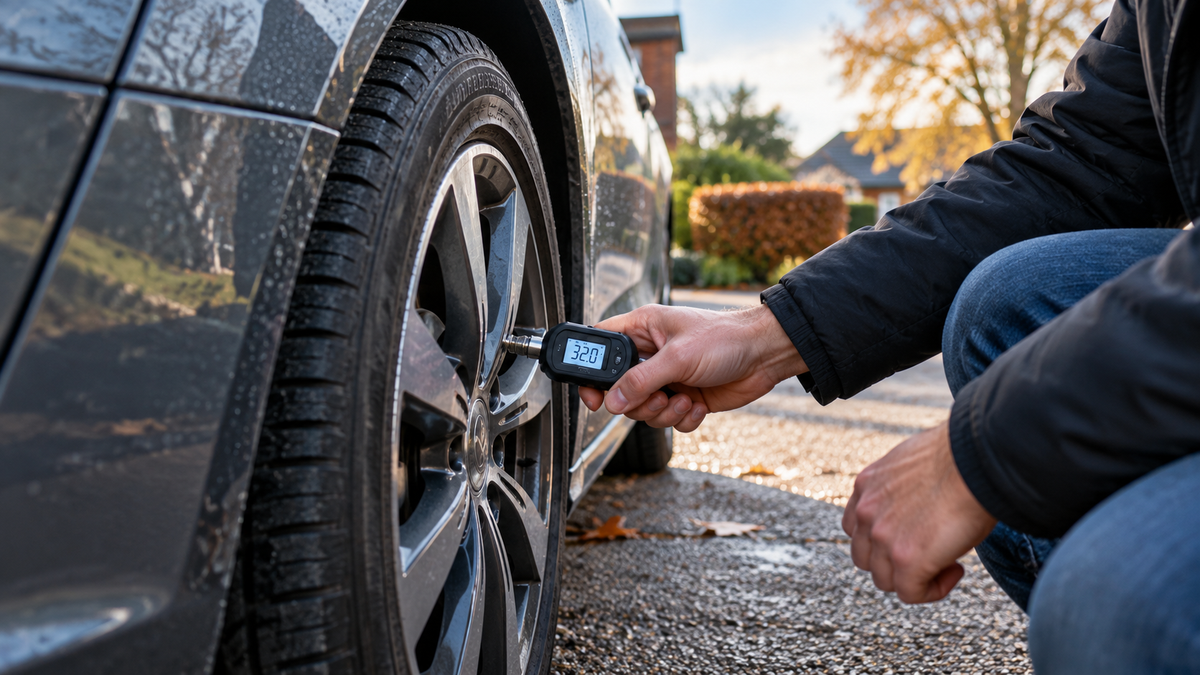
A compact digital tyre pressure gauge lets you check the actual pressure of each tyre while the vehicle is still cold.
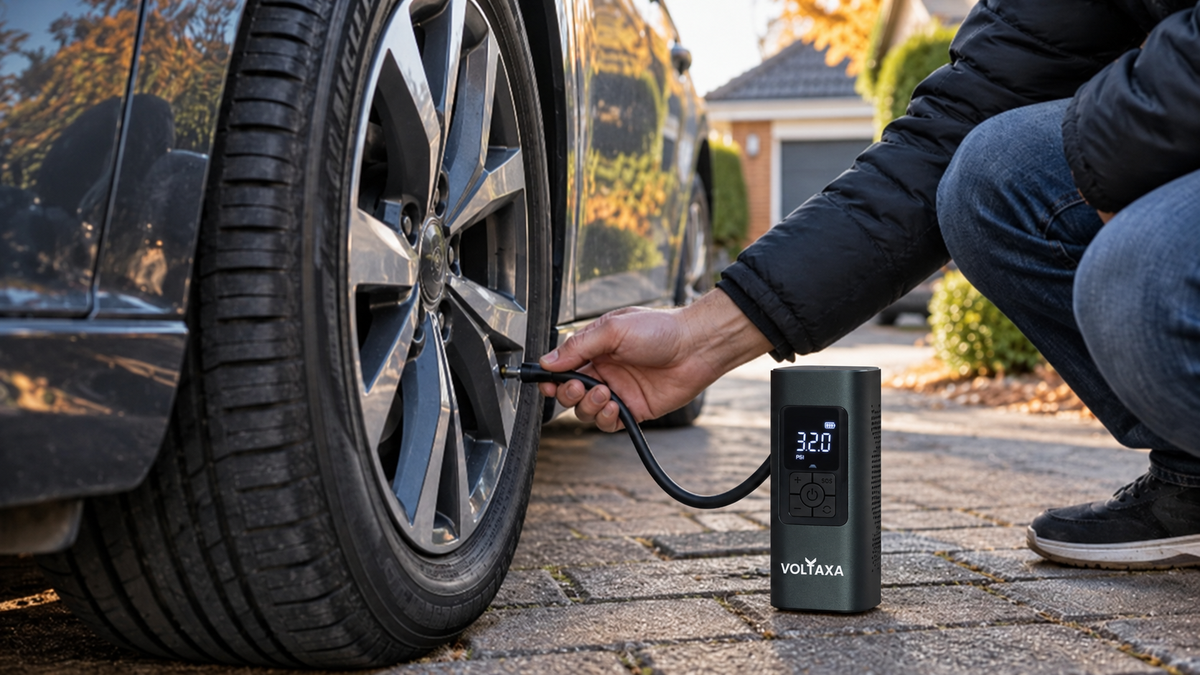
If a tyre is below the manufacturer's recommended figure, the Voltaxa Cordless Tyre Inflator lets you top it up at home or keep an inflator available in the vehicle for when you need it.

For drivers who want the main tyre-checking essentials together, see the Voltaxa Tyre Safety Kit, or browse our Car Maintenance collection.
How to inflate a tyre correctly
If you have checked a tyre and found that it is low, our existing guide walks through the process from finding the correct PSI to reconnecting the valve cap.
Read: How to Inflate a Tyre at Home – Step-by-Step UK Guide
Frequently asked questions about tyre pressure in cold weather
Does tyre pressure really drop when it gets cold?
Yes. As the air inside the tyre cools, the measured pressure falls. A useful rule of thumb is around 1–2 PSI for every 10°C change in temperature, although the exact amount varies.
Can cold weather make the tyre pressure warning light come on?
Yes. A sufficiently large temperature drop can reduce pressure enough to trigger TPMS. You should still check the tyres to rule out an actual loss of air.
Should I inflate my tyres more in winter?
Inflate them to the cold pressure recommended by the vehicle manufacturer. Do not automatically add extra PSI simply because the weather is colder.
Where do I find the correct tyre pressure for my car?
Look in the vehicle handbook, inside the driver's door area or around the fuel filler flap. Some vehicles specify different pressures depending on load and between the front and rear tyres.
Should tyre pressure be checked before or after driving?
Before driving is best because the manufacturer's figures are normally cold-tyre pressures. Driving warms the tyre and raises the pressure reading.
Why does one tyre keep losing pressure when the others don't?
A single tyre repeatedly losing pressure can indicate a slow puncture, valve problem, wheel issue or tyre damage. Have it inspected rather than repeatedly topping it up.
Final thoughts
Cold weather and tyre pressure are closely linked. A frosty morning can produce a lower reading without a puncture, and a sudden seasonal temperature change may even be enough to trigger your TPMS warning.
The practical response is simple: check your tyres cold, use the manufacturer's recommended pressure and investigate repeated pressure loss.
Making this part of your normal autumn and winter car checks can help you identify small problems before they become larger ones—and having a gauge and inflator available means you can check and correct pressure without waiting for your next trip to a petrol station.

Leave a comment
This site is protected by hCaptcha and the hCaptcha Privacy Policy and Terms of Service apply.