
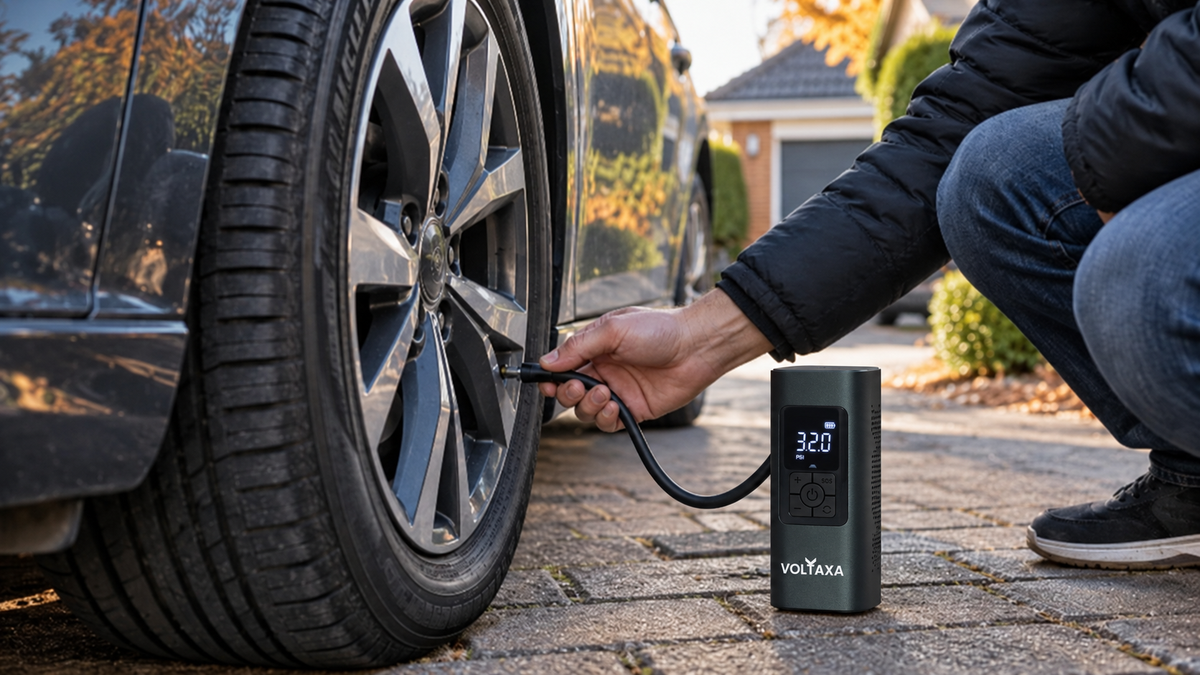
How often should you check your tyre pressure? For most UK drivers, at least once a month is a sensible minimum, while the AA recommends aiming to check every couple of weeks. You should also check before a long journey, after a noticeable temperature change, before carrying a heavy load and whenever your tyre pressure warning light comes on.
That may sound frequent, but tyres naturally lose small amounts of air over time, and pressure can also change with temperature. A quick check takes only a few minutes and can help you spot a slow puncture or other problem before it becomes more serious.
How often should you check tyre pressure in the UK?
There is no single UK law telling private motorists to check tyre pressure on a particular day of every month, but major motoring and tyre organisations give clear maintenance guidance.
- The AA: aims for a tyre pressure check every couple of weeks.
- RAC: recommends checking once a month.
- Michelin: recommends checking once a month and before a long journey.
For everyday driving, a good routine is therefore to check every two to four weeks, with additional checks whenever your driving conditions change.
If you want the simplest habit to remember, pick one regular day each month and make tyre pressure part of your basic car checks. Drivers covering high mileage, towing, carrying heavy loads or driving through rapidly changing weather may want to check more often.
Why do tyre pressures need checking regularly?
Tyres are not perfectly airtight. Small amounts of pressure can be lost naturally over time, even when there is no obvious puncture.
Pressure can also change because of:
- changes in outside temperature;
- a slow puncture;
- a leaking tyre valve;
- a poor seal between the tyre and wheel;
- wheel or tyre damage; and
- normal gradual air loss.
That means a tyre that was correctly inflated a few weeks ago is not guaranteed to still be at the manufacturer's recommended pressure today.
Regular checks also make unusual behaviour easier to notice. If three tyres remain stable but one consistently needs topping up, that is useful information and may point to a leak or damage that deserves professional inspection.
Should you check tyre pressure before every journey?
You do not normally need to connect a pressure gauge before every short trip.
However, checking before certain journeys is sensible:
- Before a long motorway journey or road trip.
- Before towing a trailer or caravan.
- Before carrying a heavier-than-normal load of passengers or luggage.
- After the car has been parked for an extended period.
- Before a holiday journey where the car will be fully loaded.
Your vehicle manufacturer may specify different pressures depending on vehicle load. Always use the correct figure for your car rather than assuming the everyday setting is right for every journey.
When is the best time to check tyre pressure?
The best time is when the tyres are cold.
The AA explains that cold tyres are tyres that have not been driven on for around two hours. Michelin similarly advises checking before driving, or after travelling less than around two miles at low speed.
This matters because tyres heat up while driving. As the air inside warms, its pressure increases, so checking after a long journey can give a higher reading than you would get before setting off.
For the most reliable comparison with the vehicle manufacturer's recommended pressure, check at home before the day's driving whenever possible.
Where can you find the correct tyre pressure?
The correct tyre pressure is set by the vehicle manufacturer, not by the number printed on the tyre sidewall.
You can usually find the recommended pressures:
- on a sticker inside the driver's door or door frame;
- inside the fuel filler flap;
- in the vehicle handbook; or
- in the vehicle manufacturer's official information.
Pay attention to whether separate figures are listed for the front and rear tyres, and whether different pressures are recommended when the car is fully loaded.
Should tyre pressure be checked more often in winter?
It is sensible to keep a closer eye on tyre pressure when temperatures are changing quickly.
Cold weather can lower the pressure reading even when no air has suddenly escaped from the tyre. That is why some drivers first notice a low-pressure warning during the first cold mornings of autumn or winter.
We cover this in more detail in our guide: Why Does Tyre Pressure Drop in Cold Weather?
If temperatures have fallen sharply since your last check, it is worth checking again rather than waiting until your normal monthly routine.
Can you rely on the tyre pressure warning light instead?
A tyre pressure monitoring system, or TPMS, is useful, but it should not replace routine manual checks.
The warning system is designed to alert you when tyre pressure changes significantly enough to trigger it. It does not mean every tyre is always sitting exactly at the manufacturer's ideal pressure.
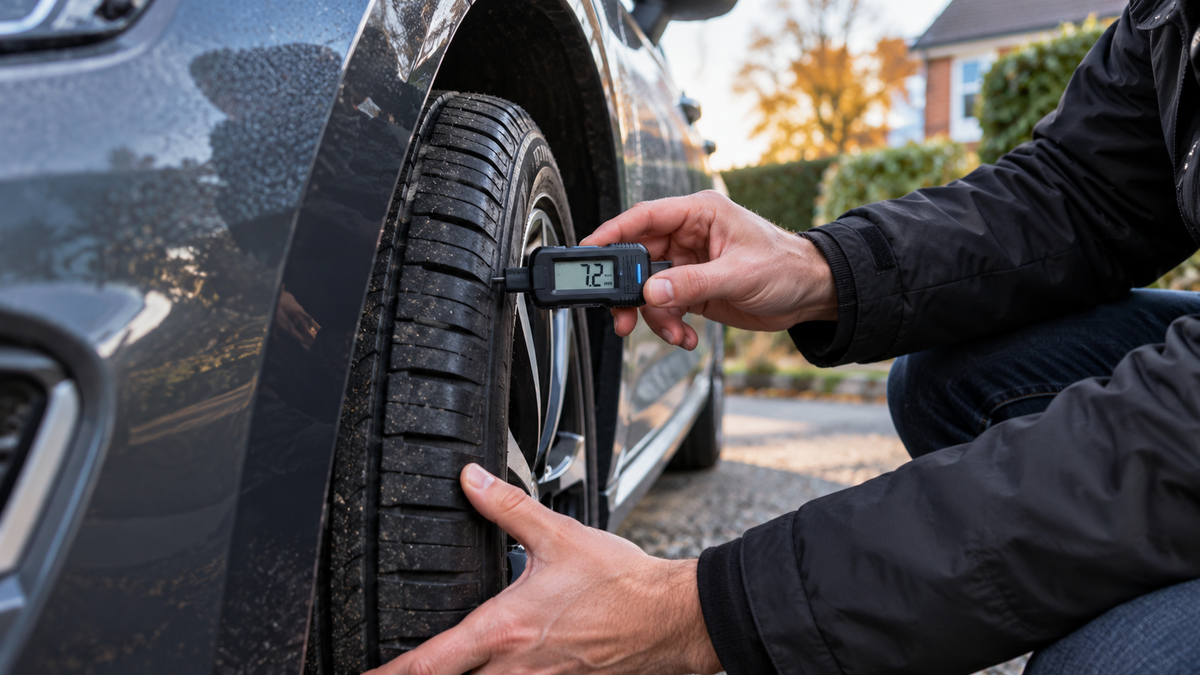
A manual gauge gives you the actual reading for each tyre, allowing you to compare all four tyres and catch smaller differences before a dashboard warning appears.
The Voltaxa Digital Tyre Pressure Gauge is compact enough to keep in the car, so you can make pressure checks part of your regular routine without relying on a petrol station.

How do you check tyre pressure correctly?
- Check the tyres when cold. Ideally, do this before driving.
- Find the manufacturer's recommended pressure. Check the door frame, fuel flap or handbook.
- Remove the valve cap.
- Press the pressure gauge firmly onto the valve.
- Read the PSI or BAR figure.
- Compare it with the manufacturer's recommendation.
- Add or release air as required.
- Check all four tyres.
- Replace the valve caps.
If the pressure is low, a portable inflator lets you make the adjustment immediately. The Voltaxa Cordless Tyre Inflator is designed for topping up tyres at home or on the road.
For a complete step-by-step walkthrough, read our guide to inflating a tyre at home.
What if one tyre keeps losing pressure?
A tyre that repeatedly loses pressure should not simply be topped up forever.
If one tyre regularly falls below the others, possible causes include:
- a nail or screw causing a slow puncture;
- a damaged or leaking valve;
- damage to the wheel rim;
- a poor bead seal; or
- damage to the tyre.
Bring the tyre back to the correct pressure if it is safe to do so, but arrange a professional inspection if the pressure continues to fall.
What about the spare tyre?
If your car carries a conventional spare wheel, do not forget it.
A spare tyre can gradually lose pressure while sitting unused, and discovering that it is flat when you actually need it defeats the point of carrying it.
Michelin recommends checking the spare periodically as well. If your vehicle uses a space-saver spare, follow the pressure figure stated for that specific wheel because it may be very different from the four road tyres.
A simple tyre-pressure routine
If you struggle to remember vehicle checks, keep the routine simple:
- Every 2–4 weeks: check all four tyres cold.
- Before long journeys: check pressure and condition.
- After a major temperature change: check again.
- Before heavy loads or towing: confirm the correct loaded pressures.
- If TPMS comes on: check all four tyres rather than simply resetting the warning.
- If one tyre repeatedly loses pressure: have it inspected.
If you prefer to keep the main tyre-maintenance tools together, the Voltaxa Tyre Safety Kit combines useful tyre-checking equipment in one setup. You can also browse the wider Car Maintenance collection.
Frequently asked questions
Is checking tyre pressure once a month enough?
For many drivers, once a month is a sensible minimum and matches guidance from RAC and Michelin. The AA recommends checking more frequently, around every couple of weeks. You should also check before long journeys and when conditions change.
Should I check tyre pressure every week?
You can, particularly if you cover high mileage or have previously experienced pressure loss, but most guidance suggests a routine somewhere between every two weeks and once a month.
Do tyres lose pressure even without a puncture?
Yes. Tyres naturally lose small amounts of air over time, and pressure readings also change with temperature.
Should I check tyre pressure when the tyres are hot or cold?
Cold is best. Manufacturer pressure figures are normally based on cold tyres, while driving warms the tyres and raises the pressure reading.
Do front and rear tyres use the same pressure?
Not always. Some vehicles specify different pressures for the front and rear axles, so always check your own manufacturer's figures.
Does tyre pressure change with passengers and luggage?
It can. Many manufacturers provide a separate pressure recommendation for a fully loaded vehicle. Check the label or handbook before a heavily loaded journey.
Final thoughts
So, how often should you check tyre pressure? A practical rule for UK drivers is at least monthly, with every couple of weeks being an even stronger routine.
More importantly, do not treat the calendar as the only trigger. Check before long journeys, after major temperature changes, when carrying unusual loads and whenever the car gives you a reason to suspect a pressure problem.
Tyre pressure is one of the quickest vehicle checks you can do at home. A few minutes with a reliable gauge can tell you a great deal about the condition of your tyres and help you spot an issue before it leaves you dealing with it at the roadside.


Leave a comment
This site is protected by hCaptcha and the hCaptcha Privacy Policy and Terms of Service apply.