
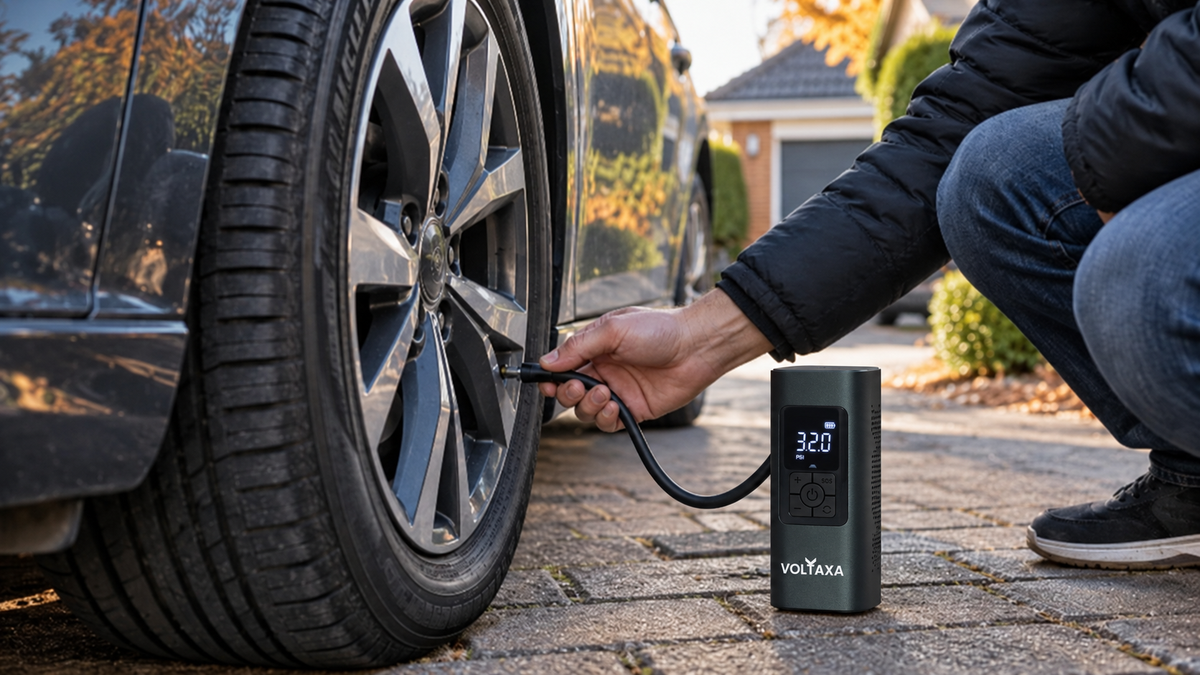
What should your tyre pressure be? There is no single PSI figure that is correct for every car. The right pressure is the one specified by your vehicle manufacturer for your exact vehicle, tyre size and load.
For UK drivers, the safest approach is simple: find the manufacturer’s recommended cold tyre pressure, check all four tyres before driving where possible, and adjust them to that figure rather than copying a number from another car or from the tyre sidewall.
Where can you find the correct tyre pressure?
You can usually find your car’s recommended tyre pressure inside the driver’s door or door frame, inside the fuel filler flap, in the vehicle handbook, or in the manufacturer’s official technical information.
The label normally gives pressures in PSI, BAR or sometimes kPa. Many vehicles list more than one pressure depending on the number of passengers, luggage or tyre size fitted.
The Highway Code states that tyres must be correctly inflated to the vehicle manufacturer’s specification for the load being carried.
Why there is no universal tyre-pressure number
It is common to hear figures such as “32 PSI” quoted as though they apply to every car. They do not.
Recommended tyre pressure depends on vehicle weight, front-to-rear weight distribution, tyre size, wheel size, vehicle load and the manufacturer’s suspension and handling setup.
That is why the same model may even have different recommended pressures depending on which wheels and tyres are fitted.
Front and rear tyre pressures may be different
Do not assume the front and rear tyres should always be set to the same figure.
Some cars use identical pressures on both axles, while others specify a higher or lower pressure at the rear. Always read the full pressure label rather than taking the first number you see.
What is the fully loaded tyre-pressure figure?
Many pressure labels show one set of figures for normal everyday driving and another for a fully loaded vehicle carrying more passengers and luggage.
The AA notes that pressure labels commonly provide one figure for normal use and a higher figure for full loads. If you are heading away with a full car, check the handbook or pressure label before leaving.
Should tyre pressure be checked hot or cold?
Manufacturer pressure figures are normally based on cold tyres.
As you drive, the tyre warms up and the air pressure increases. Checking immediately after a long journey can therefore give a higher reading than you would see before driving.
The AA describes cold tyres as tyres that have not been driven on for at least two hours. If possible, check pressure at home before setting off.
For a regular checking routine, see How Often Should You Check Tyre Pressure?
Should you use the number written on the tyre sidewall?
No — not as your vehicle’s target pressure.
The markings on a tyre sidewall contain important information about the tyre, but the correct inflation pressure for normal use should come from the vehicle manufacturer.
How to check your tyre pressure accurately
- Find the manufacturer’s recommended cold pressure.
- Park safely and allow the tyres to cool if the car has been driven.
- Remove the valve cap.
- Press a reliable pressure gauge firmly onto the valve.
- Read the PSI, BAR or kPa value.
- Compare it with the correct front or rear figure.
- Add or release air as necessary.
- Repeat on all four tyres.
- Replace the valve caps.
The Voltaxa Digital Tyre Pressure Gauge is a compact way to check pressure at home or on the road. If a tyre needs topping up, the Voltaxa Cordless Tyre Inflator lets you adjust the pressure without relying on a forecourt air machine.
What if your tyre pressure keeps dropping?
If one tyre repeatedly needs more air than the others, do not simply keep topping it up indefinitely.
Repeated pressure loss can be caused by a slow puncture, a leaking valve, a poor seal between the tyre and wheel, wheel damage or tyre damage.
Our guide on why tyre pressure drops in cold weather explains normal temperature-related changes, but one tyre losing pressure faster than the others can indicate a fault.
Does cold weather change the correct PSI?
Cold weather can lower the pressure reading, but that does not mean you should invent a higher “winter PSI”. Check the tyres cold and restore them to the manufacturer’s recommended cold pressure.
Why correct tyre pressure matters
The Highway Code warns that braking and steering can be adversely affected by under-inflated or over-inflated tyres. Incorrect pressure can also contribute to uneven tyre wear.
Pressure is only one part of tyre safety. You should also check tread and condition. Our guide explains the UK legal tyre tread depth.
Frequently asked questions
Is 32 PSI correct for every car?
No. 32 PSI is common on some vehicles, but the correct pressure depends on your own car, tyre size and load.
Where is the tyre-pressure sticker?
It is commonly inside the driver’s door area or fuel filler flap. If you cannot find it, check the vehicle handbook.
Should front and rear tyres be the same PSI?
Not necessarily. Many vehicles specify different pressures for the front and rear axles.
Should I add more pressure when the car is full?
If your manufacturer provides a separate fully loaded pressure, use that figure when carrying the relevant load.
Can I check tyre pressure after driving?
You can measure it, but the tyres will be warmer and the reading higher. Cold checks are best for comparing with the manufacturer’s figure.
Final thoughts
The correct tyre pressure is not a universal number. It is the figure chosen by your vehicle manufacturer for your specific car and load.
Find the label, check your tyres cold, use the correct front and rear figures, and investigate any tyre that repeatedly loses pressure.
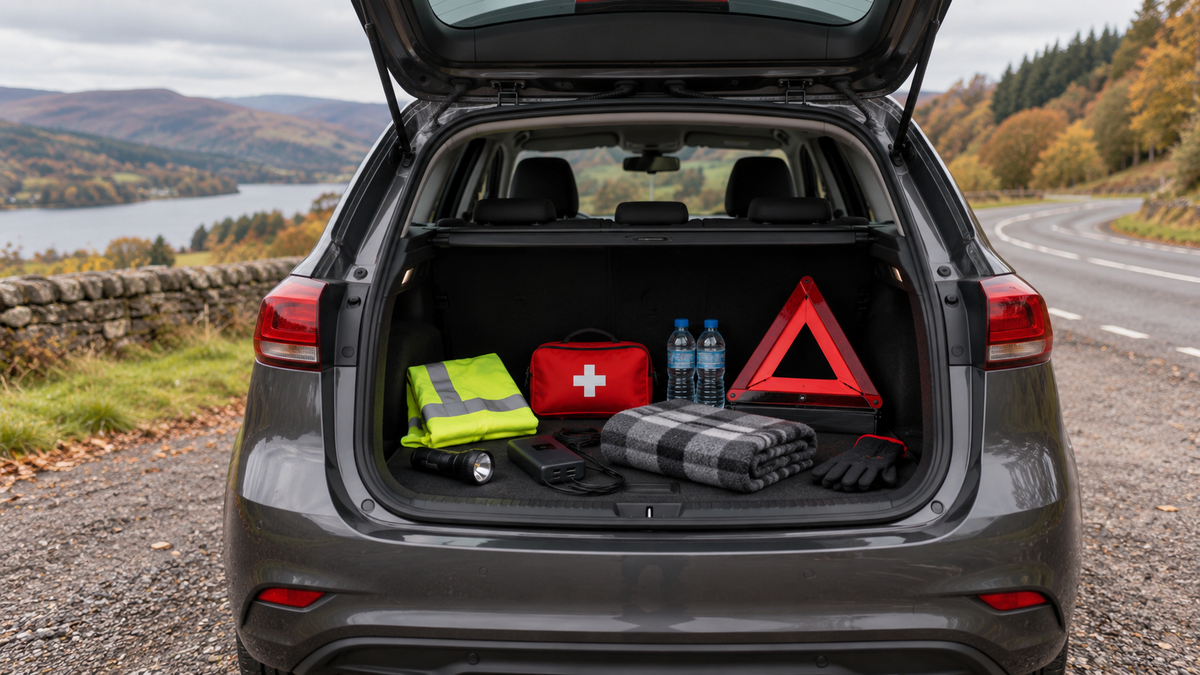
For an easy home setup, browse the Voltaxa Tyre Safety Kit or our wider Car Maintenance collection.

Leave a comment
This site is protected by hCaptcha and the hCaptcha Privacy Policy and Terms of Service apply.