
A slow puncture should not be treated as safe for normal driving. Because the tyre is losing air, its pressure can continue falling until handling, braking and the tyre structure are affected.
If you discover repeated pressure loss, arrange professional inspection as soon as possible. If the tyre is visibly damaged, very low, flat or unstable, do not keep driving on it.
What is a slow puncture?
A slow puncture is an air leak that releases pressure gradually rather than causing an immediate flat tyre.
Common causes include a nail or screw in the tread, a leaking valve, damage around the wheel rim, a poor tyre-to-wheel seal or impact damage.
Signs of a slow puncture
- one tyre needs topping up more often than the others;
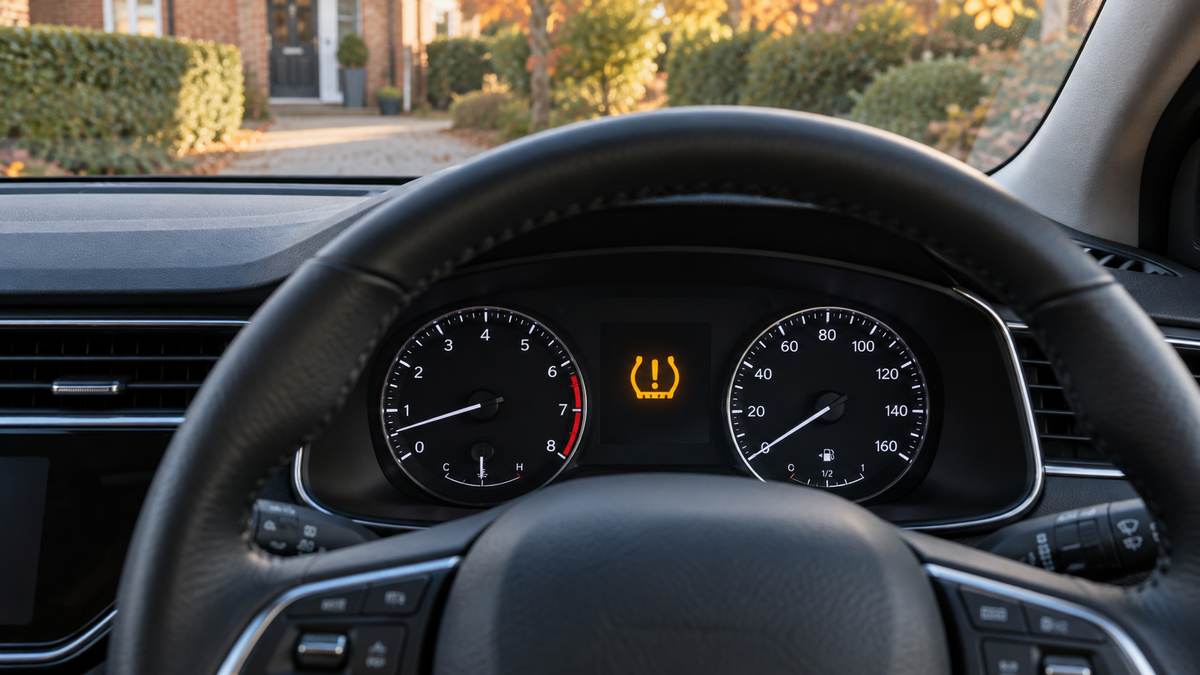
- TPMS warnings keep returning;
- the car pulls to one side;
- handling feels less responsive;
- the tyre looks lower or misshapen;
- a screw, nail or other object is visible in the tread; or
- pressure falls again soon after inflation.
RAC guidance highlights repeated top-ups, steering changes, poor handling and TPMS warnings as common signs.
Can you keep driving with a slow puncture?
You should not continue using the car normally while knowing a tyre is losing pressure.
As pressure falls, the sidewall flexes more and the tyre can overheat or suffer structural damage. Michelin warns that driving at low pressure or flat can damage the internal structure enough to make a tyre unrepairable.
If you are at home or another safe location, the best option is to arrange inspection before setting off.
What if you notice the puncture while already driving?
Reduce speed smoothly and stop in a safe place as soon as practical. Do not inspect or repair the tyre next to fast-moving traffic.
If the tyre is badly deflated, damaged or the vehicle feels unstable, call breakdown assistance rather than trying to reach a garage.
If you are on a motorway or high-speed road, follow the Highway Code breakdown rules and do not attempt roadside repairs.
Should you remove a nail or screw from the tyre?
Not at the roadside and not before a professional inspection.
A foreign object may be temporarily limiting the rate of air loss. Removing it can cause pressure to escape much faster.
Can you simply inflate a slow puncture?
Adding air may restore pressure temporarily, but it does not repair the leak.
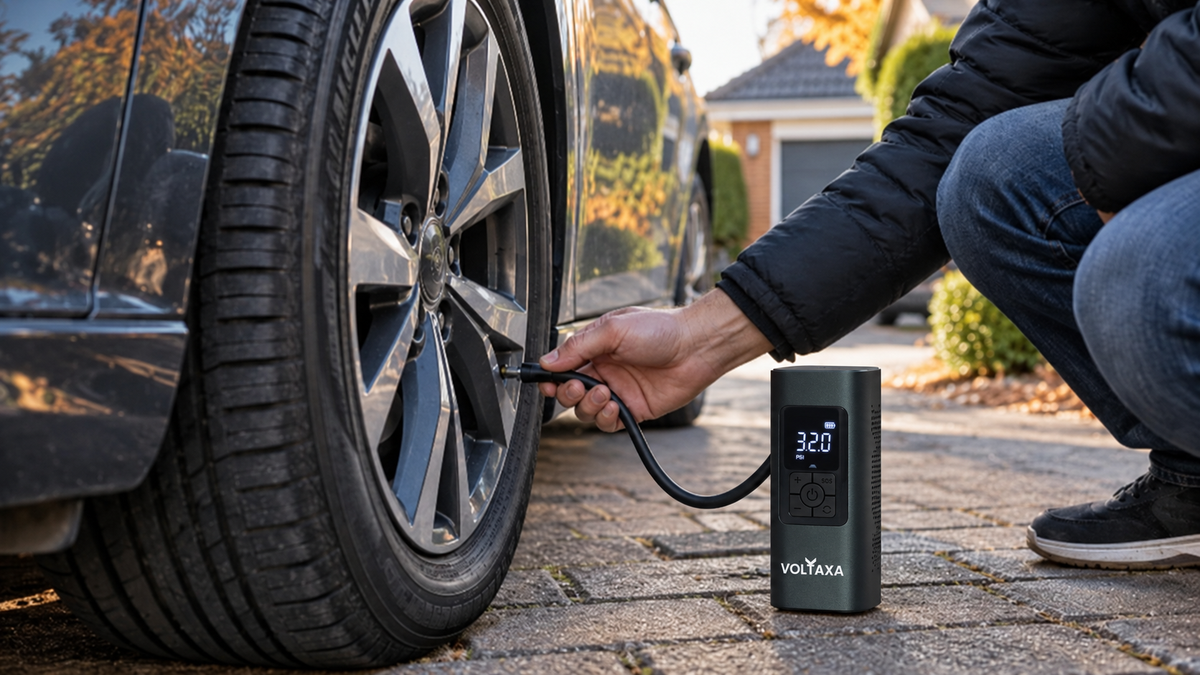
A pressure gauge can help confirm whether one tyre is falling faster than the others. A portable inflator can top up an otherwise intact tyre in a safe location, but repeated top-ups are not a substitute for repair.
Can a slow puncture be repaired?
Sometimes. Repairability depends on the location and size of the damage and whether the tyre has been driven while under-inflated.
Michelin notes that punctures in the tread area can often be repaired after professional inspection, while shoulder and sidewall damage is generally not suitable for a standard repair.
A proper inspection is important because internal damage cannot always be seen from outside.
What about temporary puncture repair products?
Some vehicles carry sealant or temporary repair kits rather than a spare wheel. These are intended to help you reach professional assistance and must be used according to their instructions and limitations.
The AA advises that DIY puncture repairs are temporary. Never attempt one on a motorway hard shoulder or beside moving traffic.
How to monitor a suspected slow puncture
- Check the cold pressure against the manufacturer’s figure.
- Record the reading.
- Check again after a short period.
- Compare the suspect tyre with the other three.
- Arrange inspection if pressure continues to fall.
See How Often Should You Check Tyre Pressure? for a normal maintenance routine.
Frequently asked questions
How fast does a slow puncture lose air?
There is no fixed rate. Some leaks lose pressure over days, while others worsen quickly.
Can TPMS detect a slow puncture?
It can warn you after pressure falls sufficiently, but regular manual checks may reveal the change earlier.
Can a screw in the tread be repaired?
Some tread-area punctures can be professionally repaired, depending on location, size and internal condition.
Can a sidewall puncture be repaired?
Sidewall damage is generally not suitable for a normal puncture repair and often requires replacement.
Can I drive to a garage?
That depends on the tyre’s condition and pressure. If it is very low, damaged or unstable, use breakdown assistance instead.
Final thoughts
A slow puncture is still a puncture. Do not let repeated top-ups turn into a substitute for fixing the cause.
Check the pressure, avoid unnecessary driving and have the tyre professionally inspected before the leak creates further damage.

Leave a comment
This site is protected by hCaptcha and the hCaptcha Privacy Policy and Terms of Service apply.